Aarush Yusuf.
Building rockets, race cars, and aircraft. Aerospace Engineering at the University of Sheffield.
Scroll
Building rockets, race cars, and aircraft. Aerospace Engineering at the University of Sheffield.
I'm an Aerospace Engineering student at the University of Sheffield, currently designing a safety-critical piston for a reusable liquid rocket engine at AVROS Rocketry and working on aerodynamics and mechanical design for Sheffield EcoMotorsport's solar race car.
I care about the full lifecycle, not just designing something but seeing it manufactured, tested, and broken. I led a ten-person team to a live rocket launch at 1,700 ft, then wrote the post-flight failure analysis that explained why the nosecone came off. I scratch-built an RC aircraft, and only got it flying after tracing a repeated in-flight failure to a centre of gravity sitting at 60% MAC.
The pattern I keep coming back to is diagnosis: figuring out precisely why a thing failed, rather than replacing parts until it stops. That is usually where the engineering actually is.
I'm designing a safety-critical piston for the propellant pressurisation system of a reusable liquid rocket engine. Its job is to keep IPA and N2O physically separated inside the propellant tank assembly. If that separation fails, the two propellants meet somewhere they were never meant to.
The core of the design is the O-rings. I'm sizing it across squeeze factor, stretch and volumetric gland fill so it holds across a 500 to 800 psi range. Gland fill is the part with no room for error: overfill it and the O-ring has nowhere to displace to under pressure, underfill it and it leaks.
Every dimension starts as a hand calculation before it becomes parametric CAD in Onshape. It keeps the geometry driven by the numbers. I document the sizing process through structured calculation records, so every value traces back to the assumption behind it. That's what makes it possible to verify the design now and reuse the logic on the next iteration.
TNO (The Named One) reached 1,700 ft apogee at the UKSEDS National Rocketry Championship. Telemetry streamed from onboard sensors to our ground station in real time the whole way up. That was the result of a ten-month build. I led a ten-person team through PDR, CDR, Manufacturing Report and Flight Readiness Review to get there.
Leading ten people turned out to be harder than the engineering, and not for the reason I expected. Our full-team meetings were quietly failing. Subteams sat through an hour of discussion that was mostly irrelevant to them, and left no better aligned than when they arrived. We needed a different structure, not more effort in the same one. So I took structures leadership myself, handed avionics to my vice-lead, and swapped the big meeting for weekly cross-team syncs. Alignment improved almost immediately. It's made me start questioning whether most "communication problems" I see are actually structural ones in disguise. Still testing that theory as I lead more teams.
On the engineering side, I modelled the full airframe in Fusion 360 and checked every OpenRocket simulation before it went in. When the avionics came in under the 300 g I'd designed around, it was tempting to treat that as a free win. It wasn't. The stability margin depended on that mass sitting where I'd assumed it would. So I added ballast to the nosecone to put the centre of gravity back where the structural design needed it.
Since July 2026 I've been an Aerodynamics & Mechanical Design Engineer, making carbon fibre bodywork for SEM03, our car for the iLumen Solar European Challenge 2028.
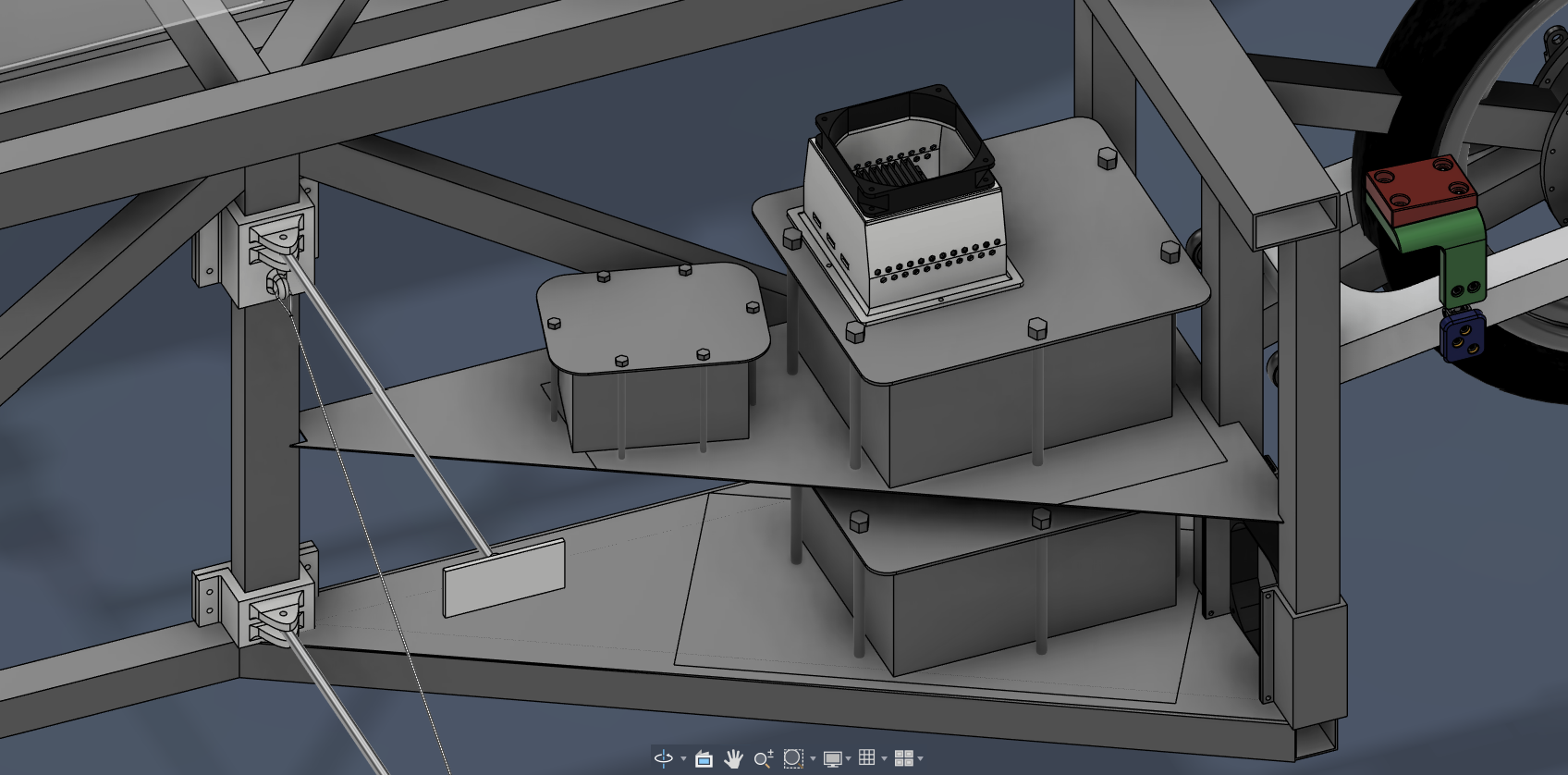
Before that I was a Powertrain Engineer. I took the battery casing through six versions in Fusion 360 to carry a 7.5 kg pack, trying L-bracket and fibreglass construction along the way. Every version went through static FEA against a 20 g load requirement. That's what validated the design we settled on: a 300 × 280 × 3 mm mild steel plate on six 12 mm rods.
Inside a seven-person powertrain sub-team, I positioned and integrated the HV and VESC busbars. I machined the VESC heat sink myself on a CNC mill and a pillar drill.
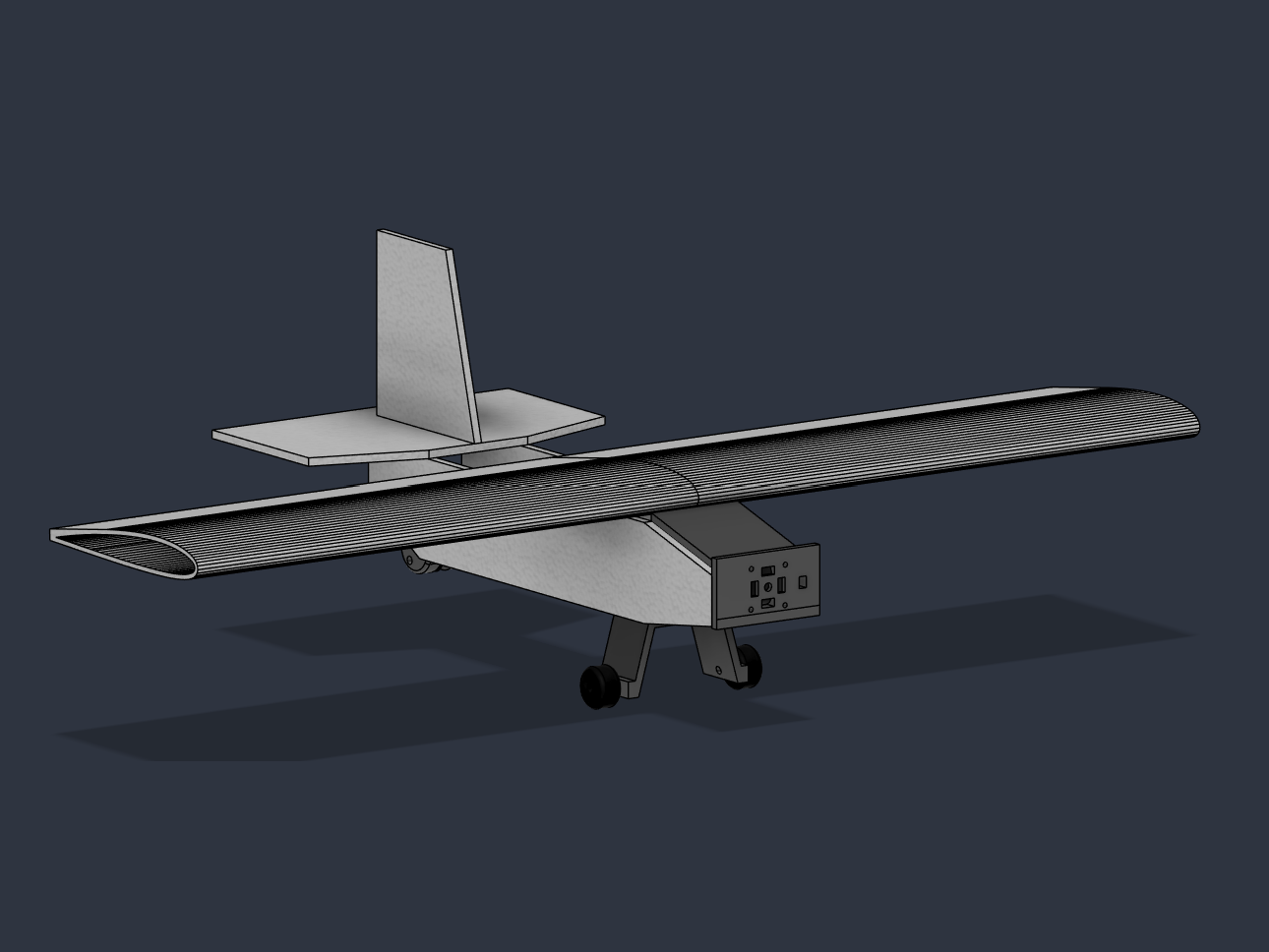
I designed and scratch-built a 600 mm wingspan fixed-wing RC aircraft from component level up. I picked the motor, ESC and battery off datasheets rather than by guesswork. The setup I landed on draws 20.53 A, which is 68% of the battery's 30 A continuous ceiling, so there is real headroom instead of the pack running at its limit.
The first motor burned out. It was a prop-size mismatch. I was running a drone motor outside its thermal limit, because fixed-wing flight asks for sustained load in a way a quadcopter's duty cycle never does. I diagnosed it and corrected the pairing.
Then it kept breaking in flight, the same way every time. It took three test cycles to work out why. Going through the flight video frame by frame put the centre of gravity at roughly 60% chord, against a safe range of 25 to 33%. That's badly aft, and it makes the aircraft violently pitch-unstable. I corrected it to 22% of the chord from the leading edge of the wing.
At Haqqathon 2026 at Imperial College London, a four-person multidisciplinary team I led built a myoelectric below-elbow prosthetic arm, aimed at amputees in conflict-affected and low-income communities.
We organised the whole project around one constraint: unit cost. We got to £72 per unit, roughly 95% cheaper than commercial alternatives. That number mattered to me, because a prosthetic the person who needs it can't afford hasn't solved anything.
I designed the full hand assembly in Fusion 360: a modular five-finger mechanism in ABS, parametrically fitted to stump geometry, with bolt-level replaceability throughout. When one finger fails, the user can replace just the finger.
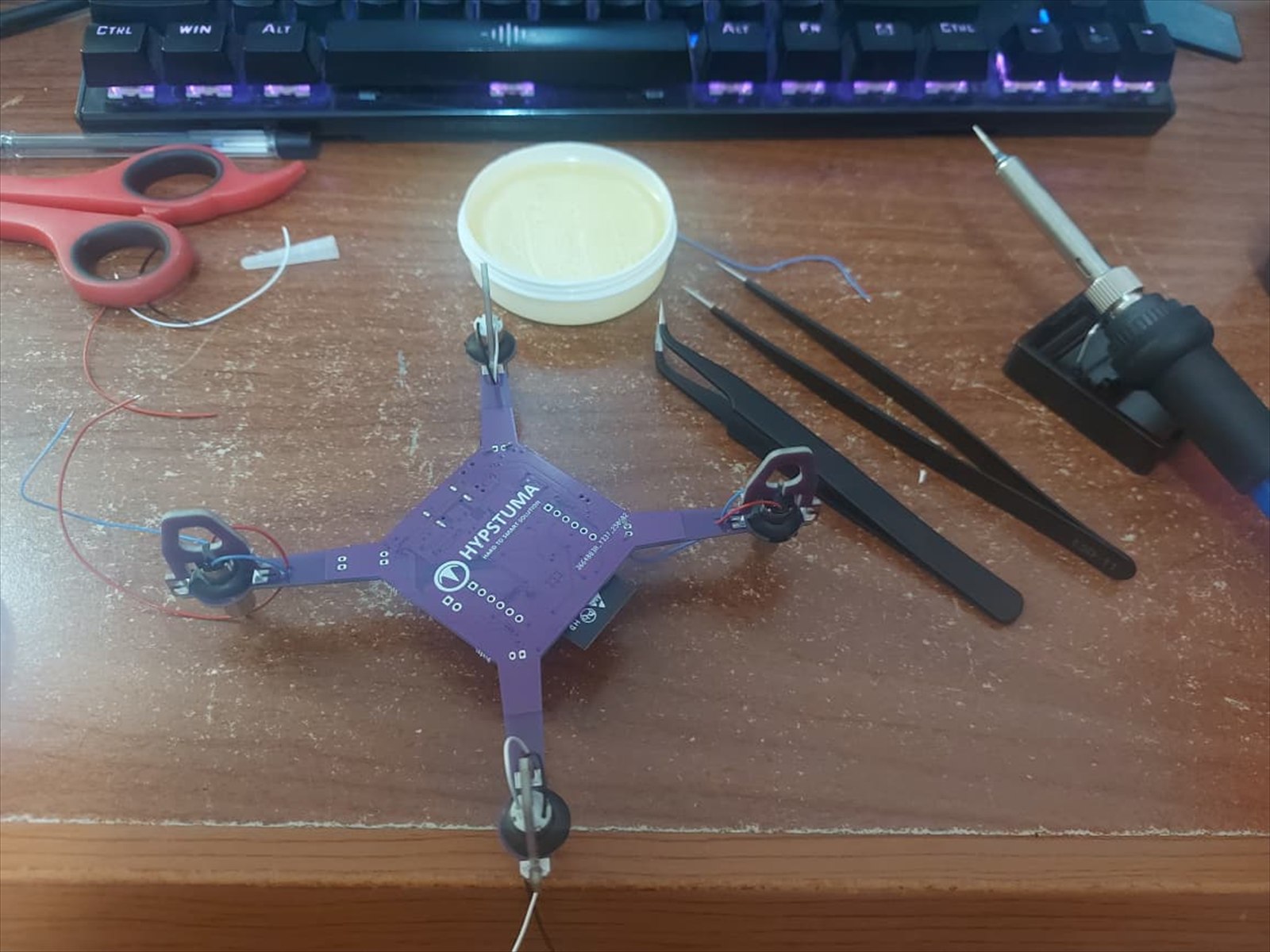
I built a 450mm quadcopter from a kit, and burnt it myself.
Figuring out how I'd done it mattered more than the fix. I worked through three checks in sequence, each one eliminating a layer: the battery via multimeter, the PCB via USB-C, then MOSFET continuity. Some of these I ran myself, others with guidance from programme experts. That last check found burnt MOSFETs.
The real failure was mine: I plugged the battery in with reverse polarity. The board had no reverse-current protection built in, so that mistake was enough to burn the MOSFETs straight away.
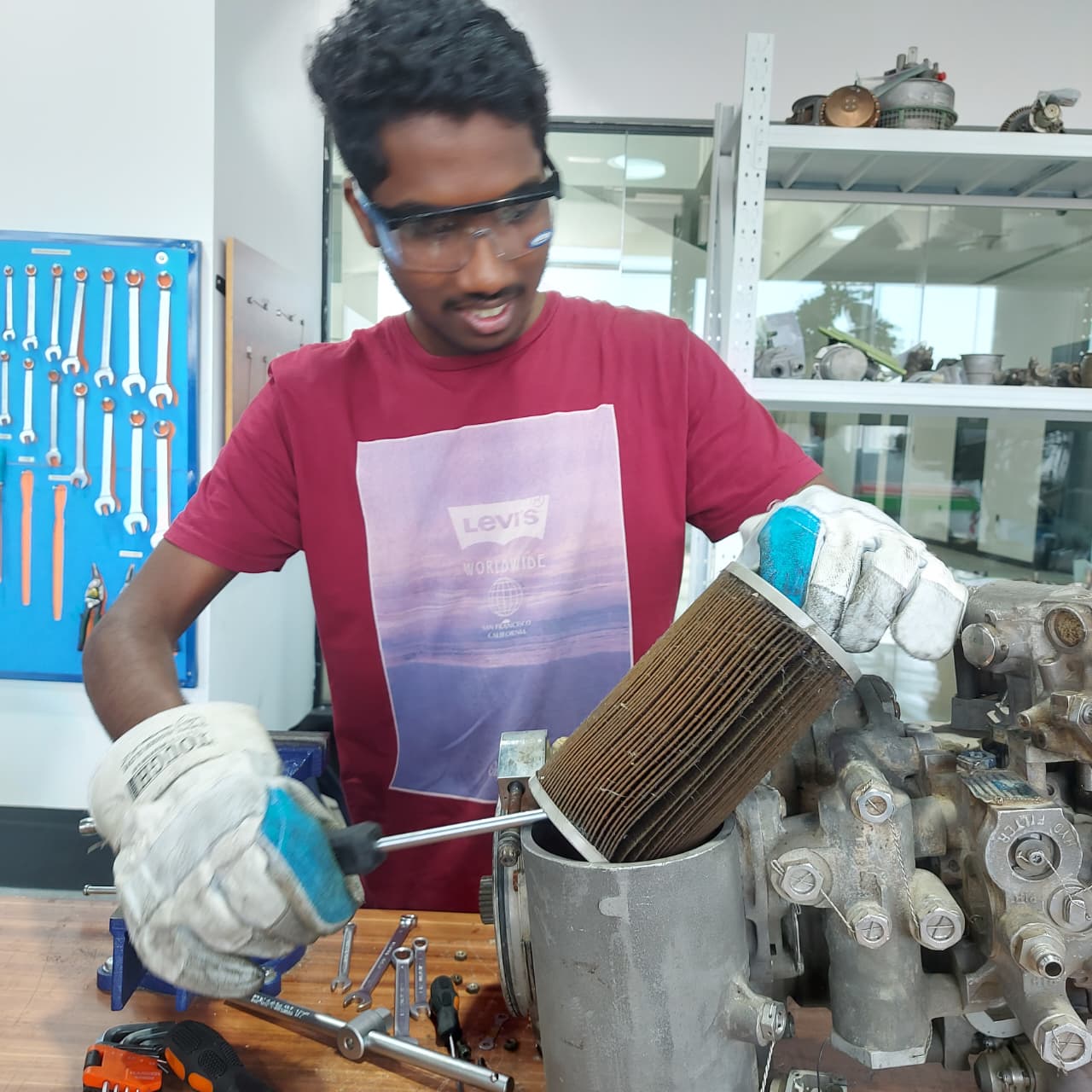
A month of hands-on aircraft maintenance at Sarsan Aviation Academy. It was the experience that got me into engineering.
I disassembled and reassembled an APU, a Soloviev D-30 turbofan, 737 and Piper landing gear, disc brakes, hydraulic tanks, fuel tanks, and a piston engine, all on decommissioned airframes. Taking a turbofan apart and putting it back together changed the way I thought about assemblies.
By the end, I was leading a five-student team, working in a regulated environment where the safety and quality standards aren't negotiable.
For the Global Engineering Challenge, our six-person team designed ANVILS, short for Accurate Networked Vehicle Information Live Service. It's a UWB mesh network for real-time bus tracking across Sheffield's public transport network.
The system reaches 17 cm positional accuracy, roughly 17.5× better than what current tracking systems achieve. I modelled TDoA positioning across 54 receiver nodes along Sheffield's Route 120 bus corridor.
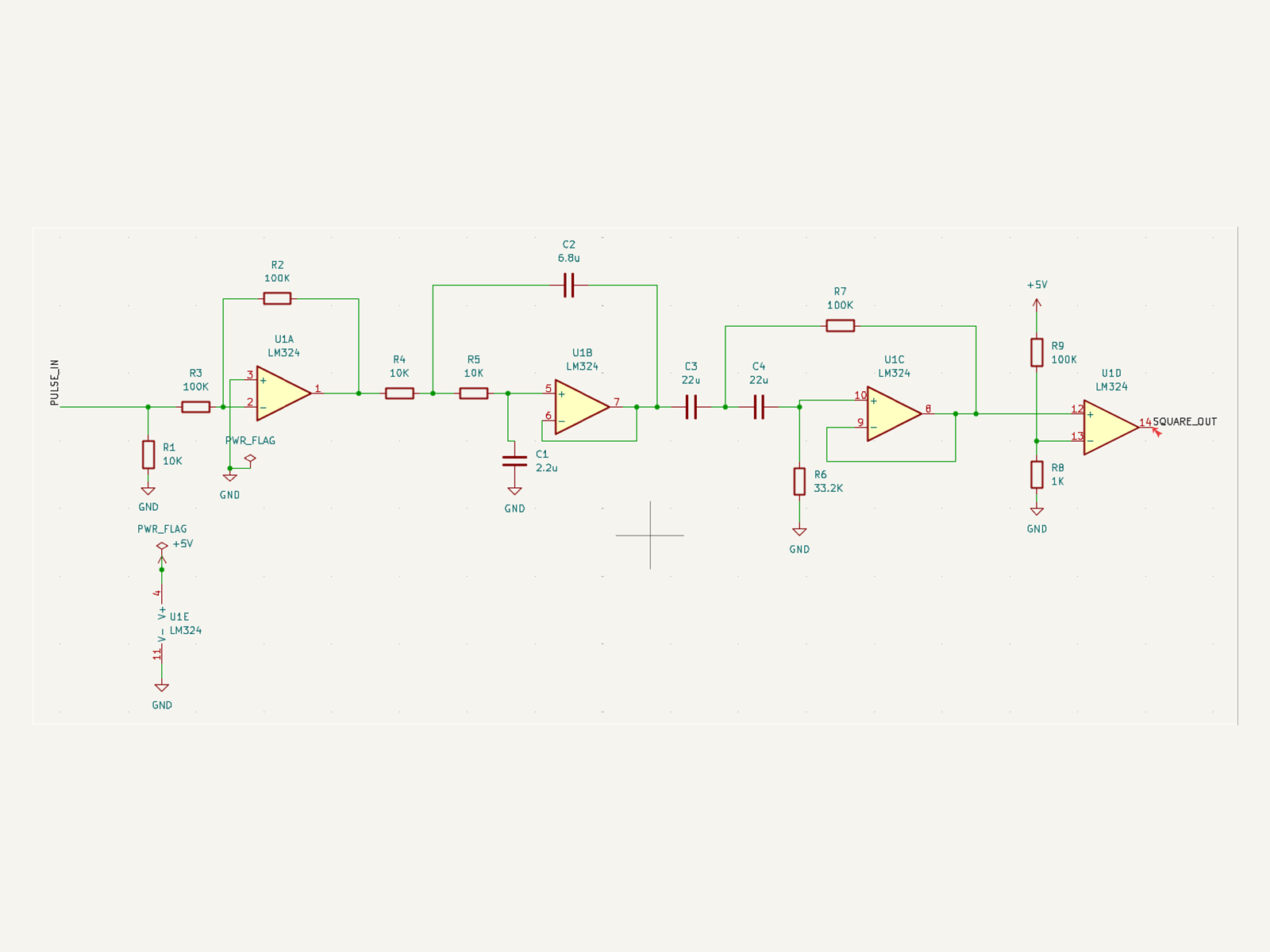
Laid out a PCB for a 3-stage analog signal-conditioning circuit (amplifier, band-pass filter, comparator).
Manually routed all traces, achieving a clean ERC/DRC pass by resolving one thermal-relief connectivity violation on the ground plane.
I competed in two engineering competitions at Emirates Aviation University.
In the team drone-building challenge I programmed the drone using a gyroscope and BetaFlight, tuning the flight stability. The team placed 1st.
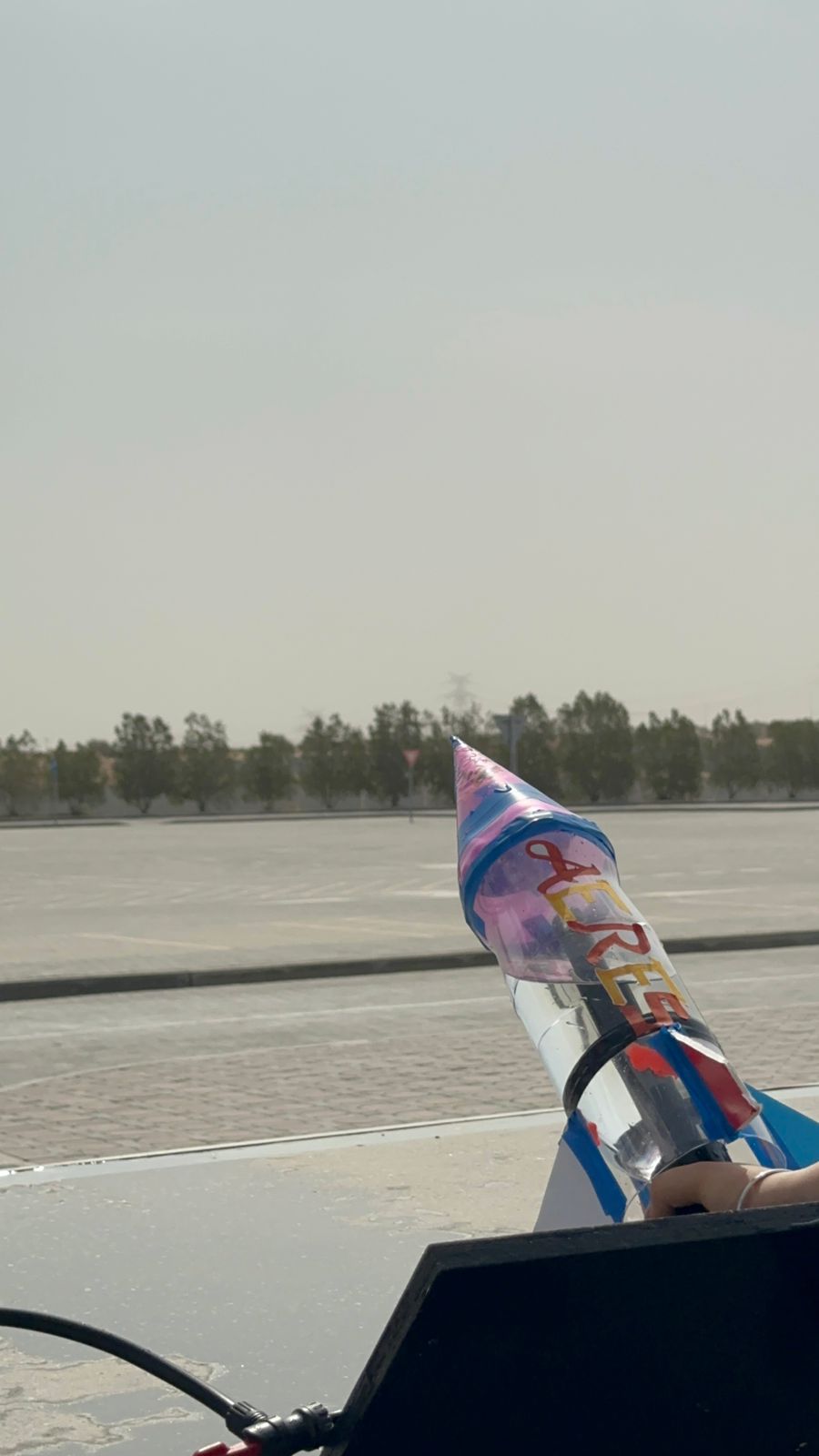
In the water rocket challenge I balanced the rocket's centre of mass against its centre of pressure to keep the flight stable. The team placed 4th.
Open to summer placements and engineering internships across the UK. Aerospace, automotive, systems. Let's talk.