Fixed-Wing Test Aircraft, Independent Project
Scratch-built a 600 mm fixed-wing RC aircraft and diagnosed a repeated in-flight structural failure to an aft CG at 60% MAC, correcting to 22% and achieving three consecutive controlled takeoffs.
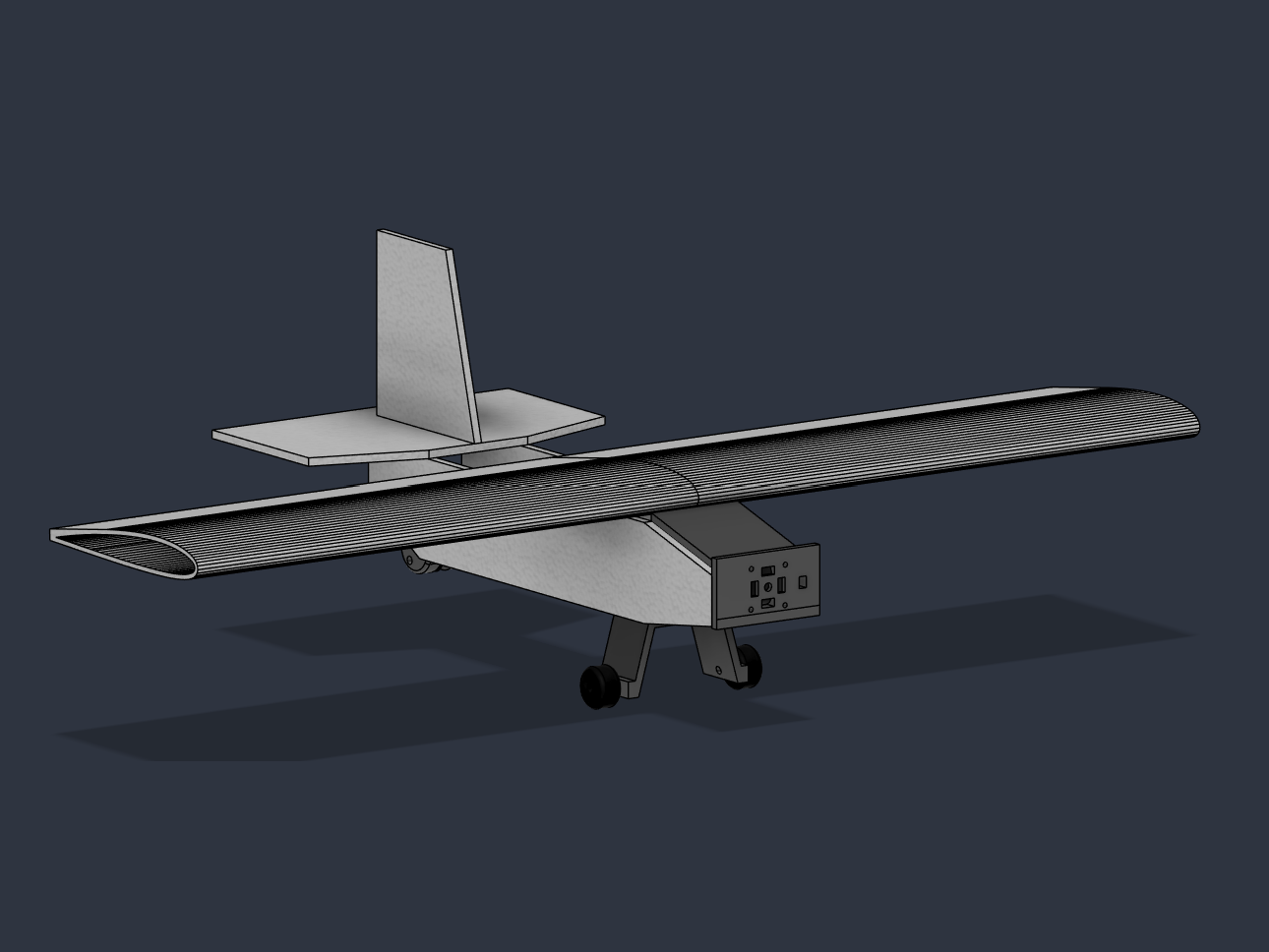
I designed and scratch-built a 600 mm wingspan fixed-wing RC aircraft from component level up. I picked the motor, ESC and battery off datasheets rather than by guesswork. The setup I landed on draws 20.53 A, which is 68% of the battery's 30 A continuous ceiling, so there is real headroom instead of the pack running at its limit.
The first motor burned out. It was a prop-size mismatch. I was running a drone motor outside its thermal limit, because fixed-wing flight asks for sustained load in a way a quadcopter's duty cycle never does. I diagnosed it and corrected the pairing.
Then it kept breaking in flight, the same way every time. It took three test cycles to work out why. Going through the flight video frame by frame put the centre of gravity at roughly 60% chord, against a safe range of 25 to 33%. That's badly aft, and it makes the aircraft violently pitch-unstable. I corrected it to 22% of the chord from the leading edge of the wing.
Even after that it failed. I checked whether my hand-launch technique was contributing too, so I cross-referenced against a ground-roll takeoff on the same airframe, the same day, which had worked. Same aircraft, same conditions, different launch method, different outcome. That isolated hand-launch as its own failure variable rather than a symptom of the CG problem. The cause was high wing loading: hand-launch wasn't giving it enough speed for flight.
Once I corrected that, I redesigned the launch technique to work around a landing-gear geometry fault, and got three consecutive controlled takeoffs. That closed out V1. Looking at where it kept failing pointed to polyfoam as the limiting structural material at the load joint, so V2 moves to PETG and carbon rod.